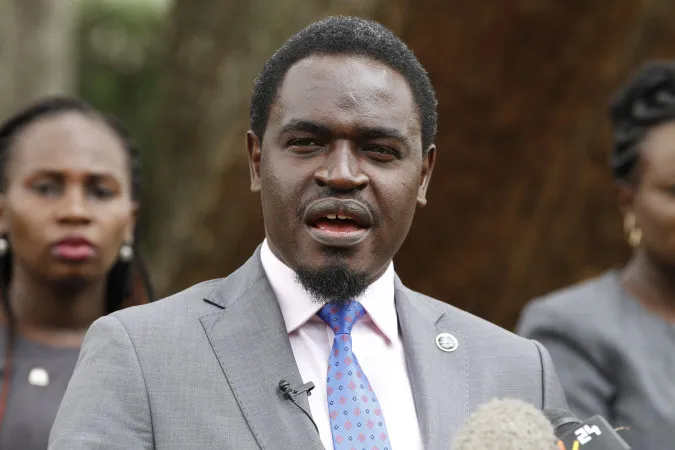


In a candid TV47 interview aired this morning, Hon. Ngunjiri Wambugu, delivered a masterclass in political analysis, tackling the Albert Ojwang case and the 2025/26 Kenyan budget with clarity. Speaking as a voice of accountability, Wambugu urged Kenyans to demand truth and transparency, warning against emotional outrage and political gamesmanship as the nation grapples with justice and economic challenges.
Wambugu dove headfirst into the Albert Ojwang case, where a young Homa Bay man’s death in custody has sparked national fury. He slammed the police’s claim that Ojwang “banged his head on a wall” as “the most ridiculous statement issued,” signaling the start of a potential cover-up. “Whoever fed that report to the spokesman is a person of interest,” he demanded, calling for a probe into the officers involved. Wambugu addressed Deputy Inspector General Douglas Kanja Lagat’s role as a complainant, cautioning, “Public perception shouldn’t dictate justice—DIG Lagat deserves due process.” Yet, he posed a piercing question: “When a police boss is the complainant, can they truly ensure no interference?”
Citing historical failures like the unsolved murder of Robert Ouko in 1990, Wambugu rejected quick fixes to quell public anger. “We can’t play politics with people’s lives,” he said, advocating for a systematic investigation starting with the arresting officers. He criticized Kenya’s reluctance to embrace stepping aside as a norm, noting, “In democracies, leaders step aside to protect integrity—Kenya must adopt this to restore trust in the police.” Wambugu also called out leaders who fuel speculation about police hit squads without actionable evidence, referencing prior mentions of Lagat in controversies. “Political rhetoric without follow-through breeds tragedies like Albert’s,” he warned, urging sustained pressure for truth.
Transitioning to the KSh 4.2 trillion budget, which Treasury Cabinet Secretary John Mbadi presents today, Wambugu hailed President William Ruto’s “genius” appointment of Mbadi, a former critic of government spending. “Now he must deliver on his own critiques,” Wambugu said, praising Mbadi’s deft communication, which sidesteps the “careless statements” that ignited 2024’s Finance Bill protests. He flagged Mbadi’s claim of slashing Kenya’s debt-to-GDP ratio from 67% to 53%—a bold assertion given the Sh11.02 trillion debt. “I’m curious how he’ll justify this,” Wambugu quipped.
With only 3 million of Kenya’s 15 million workforce paying taxes, Wambugu underscored Mbadi’s task to broaden the tax base through trust, not coercion. He framed the 2025/26 budget as the last “technical” budget before the populist budgets of 2026 and 2027, which he predicts will dangle tax cuts to sway voters. “Kenyans have never trusted the government with their money,” he declared, urging citizens to scrutinize every shilling, especially in supplementary budgets.
As Kenya awaits Mbadi’s budget and answers in the Albert case, Wambugu’s rallying cry justice and fiscal discipline demand relentless vigilance sets the tone for a nation at a tipping point.