
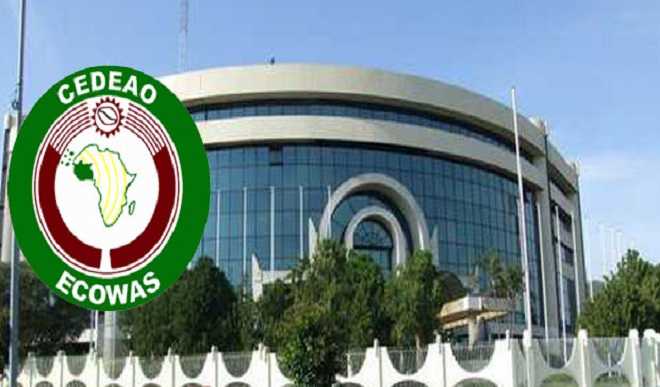
Amid escalating unrest, political instability, and the growing influence of extremist groups, leaders from the Economic Community of West African States (ECOWAS) gathered in Abuja on Sunday for a high-stakes summit that underscored the region’s fragile security landscape.
Sierra Leone’s President Julius Maada Bio assumed the rotating chairmanship from Nigerian President Bola Ahmed Tinubu and declared that the West African region is “at a crossroads,” urging a bold and immediate overhaul of collective security mechanisms.
The summit was marked by candid acknowledgements of deep-rooted and evolving challenges, ranging from terrorism and illicit arms flows to the erosion of democratic governance. “The democratic space is under strain,” Bio stated, emphasizing that the constitutional order in several member states had been undermined. His comments echoed growing regional concern as military coups and attempted putsches have destabilized nearly half of ECOWAS’s member states over the last decade.
Particularly alarming is the exit of three junta-led countries, Mali, Burkina Faso, and Niger, from the bloc. These nations have since formed their own security pact, the Alliance of Sahel States (AES), and launched a joint 5,000-strong force for coordinated military operations.
Analysts, including Ikemesit Effiong of SBM Intelligence, believe that bringing these countries back into the ECOWAS fold will be Maada Bio’s biggest diplomatic challenge.
Outgoing chair Tinubu warned that jihadist threats are intensifying across the Sahel and Lake Chad regions, with insurgent attacks bleeding into coastal states. While ECOWAS previously announced a standby force to combat terrorism, Tinubu expressed concern about its delayed implementation, noting, “We must act decisively.”
As ECOWAS navigates this pivotal moment, leaders are under immense pressure to restore regional unity, operationalize collective defense measures, and reinforce democratic norms before West Africa’s crisis spirals further out of control.