

The United States has issued a security advisory for its citizens in Kenya, warning them of an increased risk of terrorist attacks as several major anniversaries approach.
In a statement Tuesday, the US Embassy in Nairobi urged Americans to exercise increased caution, noting that extremist groups such as al-Shabaab continue to pose a persistent threat, particularly in the capital.
The advisory specifically highlighted the anniversaries of past attacks, including those on September 11, 2001, in the United States, the Westgate Mall siege in Nairobi on September 21, 2013, and the Hamas assault on Israel on October 7, 2023.
“Locations such as hotels, embassies, restaurants, malls and markets, schools, police stations, places of worship, and other places frequented by foreigners and tourists continue to be attractive targets,” the Embassy said.
“Terrorist groups can attack with little to no warning.”
As a precaution, the embassy advises US citizens to remain vigilant in areas frequented by tourists, review their personal security plans, monitor local media, avoid areas where protests and demonstrations are taking place, avoid crowds and keep a low profile.
Kenya has suffered a number of attacks carried out by the Somalia-based Al-Shabaab since sending troops into its neighbour in 2011 to battle the Al-Qaeda-affiliated jihadists.
In 1998, al-Qaeda operatives bombed the US embassy in Nairobi by ramming its gate with a truck.
A total of 213 people, including 12 Americans and 34 local embassy staff, died in the attack.
More recently, al-Qaeda-linked al-Shabab militants from neighbouring Somalia have threatened to attack Kenya in retaliation for its deployment of troops in Somalia.
In 2011, Kenya sent hundreds of troops into Somalia after a spate of kidnappings, including the abduction of four Europeans in Kenya, which were blamed on al-Shabab.
In October, the country will mark the 12th anniversary of the 2013 siege of the Westgate shopping centre in the capital, Nairobi, which killed 67 people.
Two years after Westgate, al-Shabaab fighters attacked Garissa University in eastern Kenya, killing 148 people, almost all students.
It was the second deadliest attack in Kenya’s history, surpassed only by al-Qaeda’s bombing of the US embassy in Nairobi in 1998 that killed 213 people.
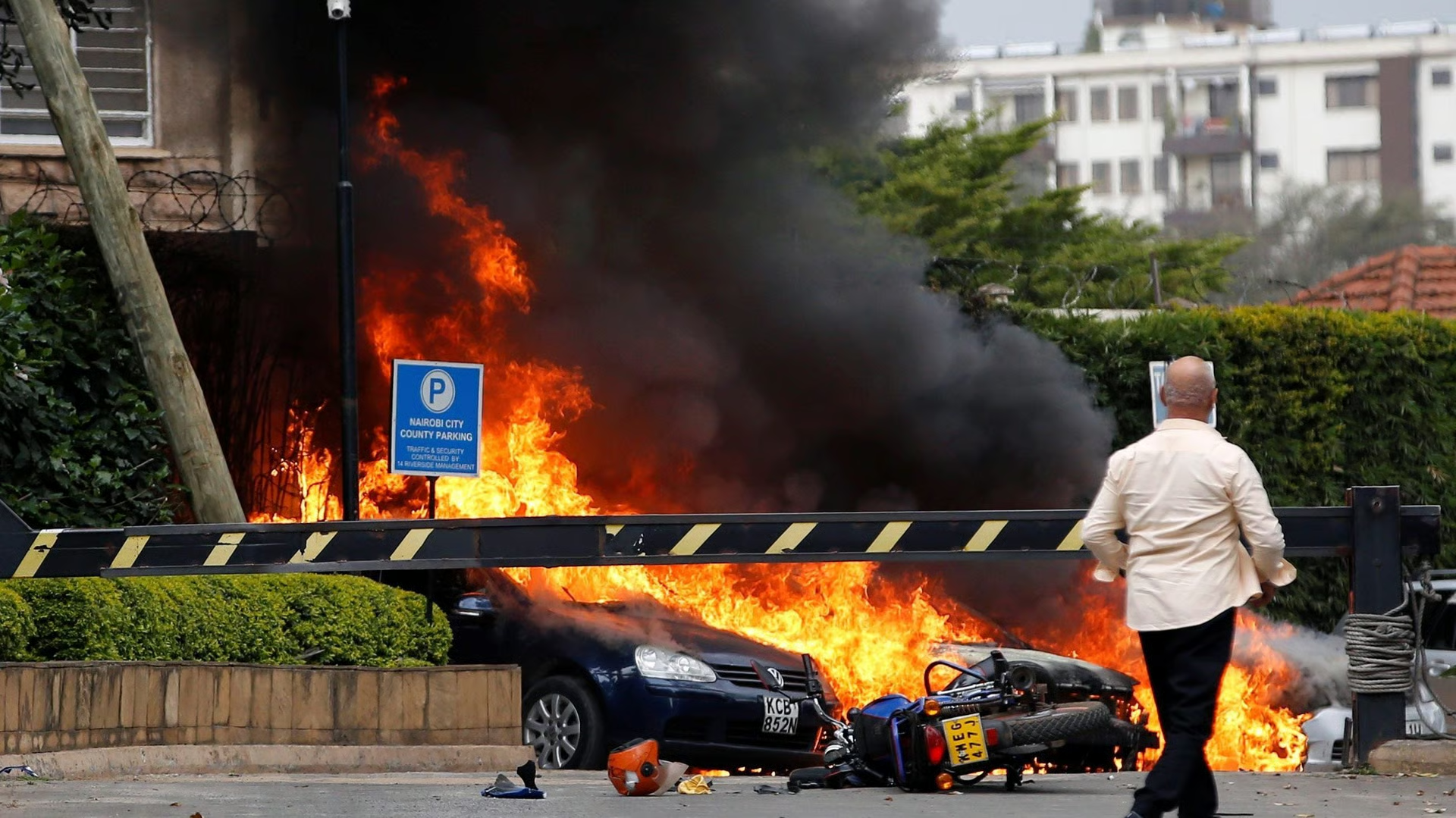
In 2019, Al-Shabaab gunmen killed 21 people at the upscale Dusit hotel complex in Nairobi.
In 2002, an Al-Qaeda suicide car bombing at an Israeli-owned resort hotel near the Indian Ocean port city of Mombasa killed at least 13 people, including three Israelis, while an Israeli jetliner narrowly escaped a missile attack on takeoff from Mombasa airport.
On October 7, 2023, Hamas killed over 1,200 people in Israel, triggering a protracted conflict in Gaza and fuelling global concerns of radicalisation and potential copycat strikes.
In its advisory, the US Embassy urged its citizens in Kenya to remain vigilant in public spaces, review their personal security plans, and avoid drawing attention to themselves.
Although Kenyan authorities are vigilant, they stressed that the unpredictable nature of terrorism requires heightened personal awareness in the coming weeks.
Kenya has endured repeated attacks by al-Shabaab targeting security forces, public spaces and civilian sites.
Despite intensified counterterrorism operations, the group remains a significant threat, with intelligence reports warning of sleeper cells operating in Nairobi and other cities.
The US advisory comes as Kenyan security agencies are bolstering patrols and surveillance in shopping centres, transport hubs, and diplomatic missions in anticipation of possible threats around sensitive dates.