

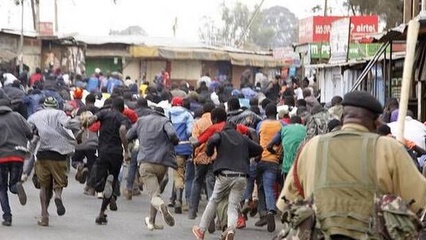
A cloud of tension hangs heavy over Ikolomani, days after violent clashes left three people dead and several injured in what locals are calling a fight for survival, not just land.
At the heart of the unrest is gold. For generations, families in the villages of Isulu and Bushiangala have relied on artisanal mining, using hand-held tools and crude shafts to extract the precious metal. To them, gold is more than wealth; it is identity, memory, inheritance, and their only trusted economy.
“We don’t steal. We don’t wait for anyone,” said one resident, still visibly shaken by the recent violence. “We wake up and dig. That’s how we earn food. If we stop, we starve.”
On a good day, an artisanal miner here earns between Sh1,000 and Sh5,000 money they say comes with dignity. The soil beneath their feet, many insist, is their “family bank account,” passed down long before governments or corporations laid claim.
That tradition now stands on a direct collision path with modern investment.
Major mining firm Shanta Gold is positioning to formally take over commercial exploration and extraction, following government approvals that cover parts of Isulu and Bushiangala. Officials have already projected a Sh22–27 billion investment for an underground mining and processing setup expected to run for at least eight years.
Government estimates place the total value of gold deposits in Ikolomani at approximately Sh680 billion a staggering figure that has drawn intense interest, scrutiny, and political heat.
However, residents maintain that development should not come at the cost of their existence. “If they want to mine, they must tell us how we will live,” another villager demanded. “We are not against progress, but don’t erase us.”
The fatal protests on December 4 erupted after residents blocked officials from the National Environment Management Authority (NEMA) and company representatives from accessing Emusali Primary School for a public forum. Police accuse “armed groups” of escalating the situation, including attacking journalists covering the chaos.
Despite the bloodshed, the mood on the ground has shifted from raw protest to a determined resistance.
Locals state they are open to talks but only if guaranteed jobs, compensation, and community ownership in whatever future unfolds. To them, mining rights are not a mere business transaction; they are a matter of survival.
As one elder put it bluntly: “We are not leaving. If this gold made our ancestors stay, we will stay too, even if it costs us.”

Leave a Reply