

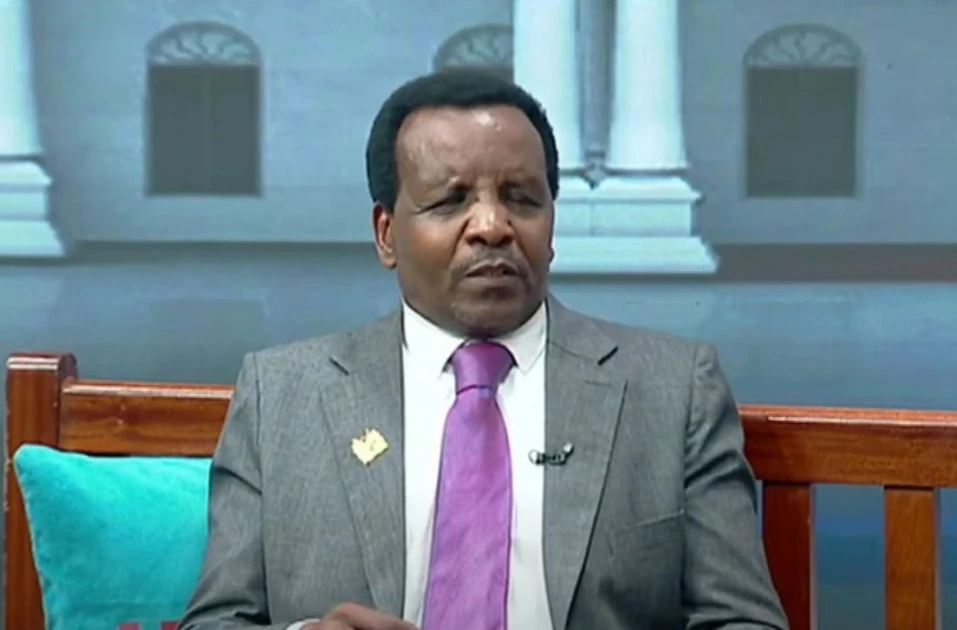
Presidential aspirant Reuben Kigame has unveiled an ambitious food security and governance reform agenda, promising to tackle drought, starvation, and systemic corruption through data-driven planning and professional leadership.
Speaking about his “game plan and journey,” Kigame said recurring hunger crises in Kenya are predictable — and preventable.
“Starvation is nothing new. We predict these problems, but when they come, we pretend to be shocked,” he said. “Planning and implementation is what I bring to the table.”
Kigame, who previously worked with Okoa Kenya, said Kenya must move from emergency response to long-term mitigation strategies. His proposal focuses on expanding irrigation projects, strengthening water harvesting systems, and reducing post-harvest losses through improved storage infrastructure.
“We must save what we have and use it during bad times,” he said. “When production is high, the government should mop up surplus, pay farmers promptly, and store it for drought seasons.”
He also pledged to seal “wastage in production,” invest in fertilizer and quality seedlings under professional management, and revitalize key agricultural regions to ensure food reaches drought-stricken areas.
Kigame criticized the continued importation of goods such as sugar and maize that are locally available. “We should buy what we produce before we import from Uganda or Tanzania,” he said.
Central to Kigame’s campaign is a pledge to end corruption, which he described as the primary barrier to national progress.
“Looting of the economy and corruption is why we cannot move forward,” he said. “Anyone unwilling to end corruption cannot lead Kenya into greatness.”
He questioned the integrity of current leadership, referencing President William Ruto and asking what progress has been made on key campaign promises.
“What has Ruto done in bringing justice? What happened to the Hustler Fund promises? What happened to the billions allegedly lost at SHA?” Kigame asked. He also raised concerns about government responses to youth protests.
Kigame called for merit-based appointments in key government ministries, including finance, agriculture, and health.
“We have incompetent people in critical positions,” he said. “We must end crony appointments and ensure professionalism and competence.”
He emphasized constitutionalism, national sovereignty, and character-driven leadership as guiding principles.
“We have personality-driven politics and wave elections instead of agenda-driven campaigns,” Kigame said. “The messiah syndrome is destroying this country. Let us choose leaders based on character and what they have done before seeking power.”
A teacher by profession, Kigame said he has spent decades advocating for justice and constitutional rights. Since the 1990s, he says, he has been in activism and done a lot to help communities.
“I am not asking for a political seat to steal. I want to change this country,” he said. “If we find a leader willing to end corruption, implement the Constitution, and put people first, I am ready to step aside and go back to teaching.”
He also underscored the economic potential of arts and talent development as tools for job creation, particularly for youth.
Kigame ran as an independent candidate in the 2022 general election after unsuccessful attempts to secure backing from multiple political parties.
“Maybe I was a novice then,” he admitted. “Many parties are about business and positions, not ideology.”
He criticized what he described as the ideological decline of Orange Democratic Movement, saying the party has shifted toward political negotiation rather than principle.
However, Kigame said he remains open to coalition-building — provided it is centered on shared values and a people-first agenda.
“If a coalition shares my ideology of ending corruption and implementing the Constitution, I am open,” he said.
Kigame said his campaign strategy focuses on grassroots mobilization at the polling station level, aiming to secure at least 20 percent support in each station nationwide. He revealed he has established nine teams working across the country and plans to unveil his broader leadership team soon.
“We are on the ground, working with professionals,” he said. “By March, you will see significant progress.”
Framing his campaign around the values of utu (humanity), haki (justice), and maandili development, Kigame called on Kenyans to scrutinize candidates more carefully.
“Politicians are friends. They mess up the health sector and fly abroad for treatment,” he said. “Kenya must come first. Leadership must be about character, competence, and the will to do what is right.”


Leave a Reply