
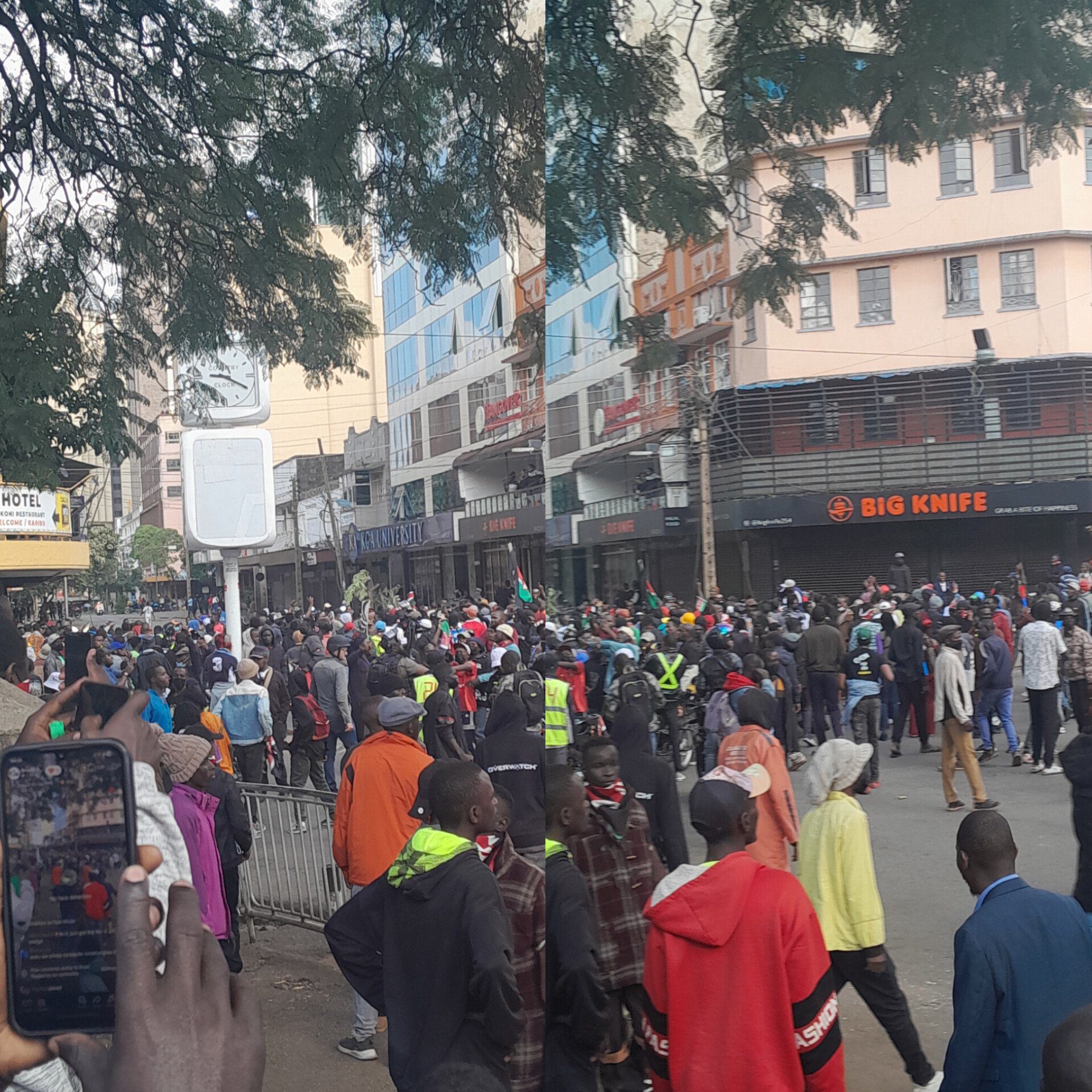
On Wednesday, June 25, a tense calm blanketed Nairobi and several other parts of Kenya as the country marked one year since the deadly anti-Finance Bill protests of 2024. A day of remembrance and renewed activism, it drew both heavy police deployment and widespread public attention amid deepening concerns over police brutality and the state of democratic freedoms in the country.
From the early hours of the morning, security forces mounted roadblocks on key entry points to Nairobi’s Central Business District (CBD), disrupting transport and forcing commuters to walk long distances. Public Service Vehicles (PSVs) from major routes such as Mombasa Road, Thika Road, and Jogoo Road were forced to offload passengers at designated areas, including Globe Roundabout, Haile Selassie Avenue, and City Stadium.
Sensitive government institutions, including the State House and Parliament, were heavily fortified with barricades and razor wire, mirroring the chaotic scenes of June 25, 2024, when protesters breached security lines in a day that ended in bloodshed. That protest, triggered by a controversial Finance Bill, resulted in the deaths of dozens and sparked international outcry over alleged use of excessive force by police.
Interior Cabinet Secretary Kipchumba Murkomen and senior security officials were stationed at Harambee House from as early as 5:30 a.m. to oversee operations. Inspector General of Police Douglas Kanja, flanked by top security commanders, issued a statement the day prior, calling for peaceful protests while cautioning against trespassing into restricted zones.
Nairobi County Police Commander George Seda emphasized the need to balance public order and the constitutional right to protest. “We are here to ensure everyone is safe, whether protesting or going about their daily business,” he said.
Civil society groups and human rights defenders used the day to demand justice for victims of last year’s violence and to renew calls for police reforms, accountability, and the protection of civic space. While the mood was more restrained compared to 2024, the symbolism of the day, marked by barricades, memory, and renewed resolve, was unmistakable.