
South Korea awoke on Wednesday to an unprecedented political moment, with both a former president and a former first lady behind bars.
Kim Keon-Hee, wife of ex-president Yoon Suk-Yeol, was arrested after a Seoul court ruled she posed a serious risk of destroying evidence. The decision followed a tense, four-hour hearing in which she denied all wrongdoing but acknowledged, in a rare personal statement, that she had “caused trouble” and described herself as “someone insignificant.”
It is the first time in the country’s modern history that both members of a former presidential couple have been detained. Yoon, ousted from office in January, is already awaiting trial on charges of attempting to impose martial law last year-a failed move that pushed South Korea into political crisis.
Kim, 52, faces a list of accusations that span years. Prosecutors allege she earned more than 800 million won-around $578,000-through a stock manipulation scheme linked to a luxury car dealership. She is also accused of accepting luxury goods, including Chanel handbags and a diamond necklace, from groups and individuals seeking political or business favours.
The charges extend into the political arena, with claims she meddled in the selection of candidates for parliamentary races in both 2022 and 2024.
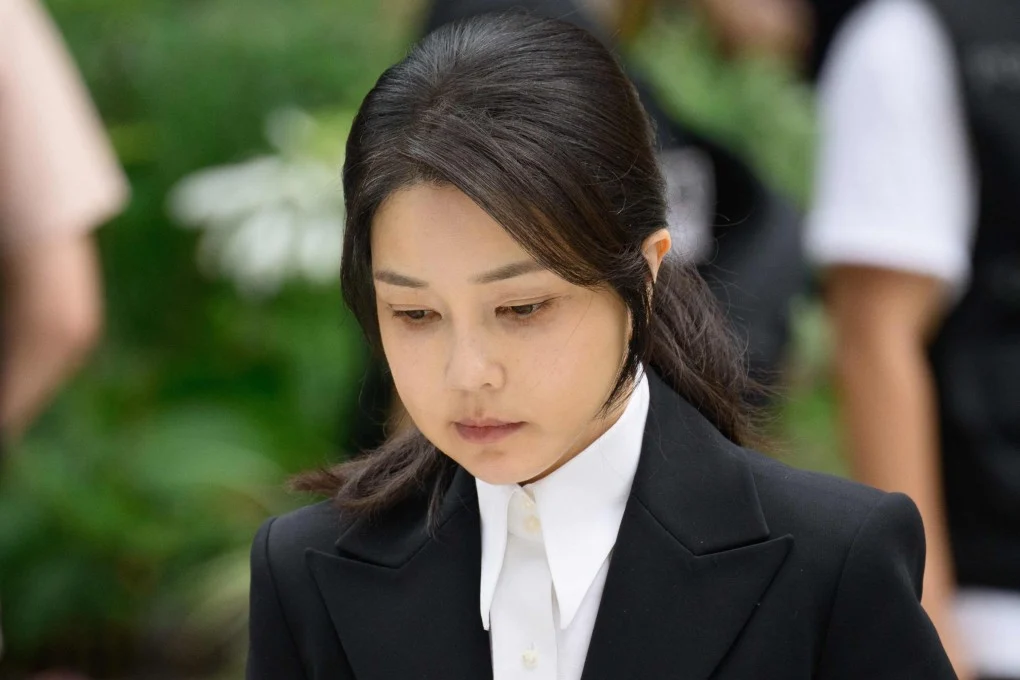
Her appearance in court was a sharp contrast to her public image as first lady. Dressed in a black suit and skirt, she stood silently before cameras, her face composed but pale. Inside the courtroom, prosecutors pressed for her detention, while her defence team argued the case was politically driven and lacking evidence.
Following her arrest, Kim was transferred to a solitary cell in Seoul Nambu Detention Center. The cell, reportedly fitted with a mattress on the floor and a small desk, offers minimal privacy but includes security measures tailored to her high-profile status. She will be held for up to 20 days before prosecutors must decide whether to file formal charges.
The political ramifications are far-reaching. While in office, Yoon vetoed multiple attempts by opposition lawmakers to authorise an independent investigation into his wife’s affairs. His final veto came just a week before he declared martial law—a move that ultimately sealed his political downfall.
Today, the woman once at the heart of South Korea’s presidential circle faces the prospect of a lengthy trial, and her husband sits in a separate cell awaiting his own. For a country long accustomed to seeing its leaders face justice after leaving office, the sight of a former first couple in custody is both extraordinary and sobering.