

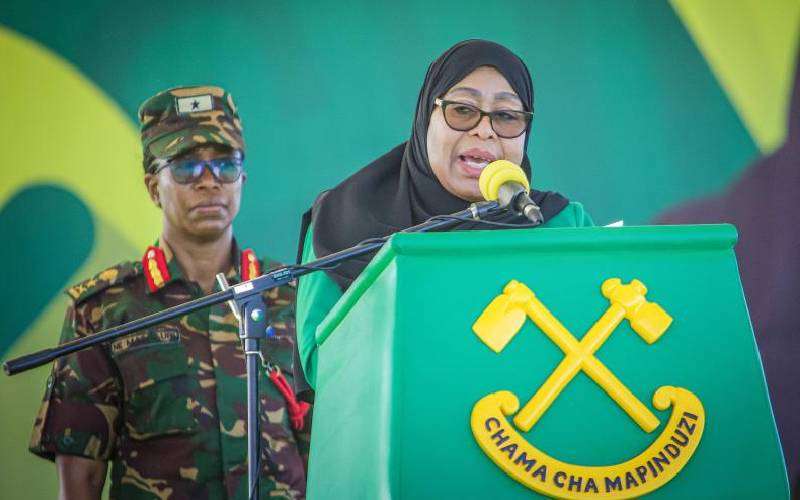
Tanzanians will now face restricted travel to the United States (US) following the signing of a new proclamation restricting access to nationals of at least 15 countries for security reasons.
Other states affected by the partial restrictions include Antigua and Barbuda, Benin, Côte d’Ivoire, Dominica, Senegal, Tonga, Nigeria, Senegal, Angola, Gabon, The Gambia, Malawi, Mauritania, Zambia, Zimbabwe, Burundi, and Togo.
While making the proclamation, US President Donald Trump said most of the listed countries suffer from ‘widespread corruption, fraudulent or unreliable civil documents and criminal records’ which, he said, systemically prevents accurate vetting.
Tanzania, Tonga, Zambia and Zimbabwe have been listed in that category for having a high visa stay rate in the US.
The proclamation imposes full entry restrictions on Burkina Faso, Mali, Niger, South Sudan and Syria, along with holders of Palestinian Authority travel documents, following the US’ latest security review.
Also downgraded to this category are Laos and Sierra Leone, which previously were subject to partial restrictions.
The seven now add onto Chad, Burma, the Republic of the Congo, Haiti, Iran, Yemen, Equatorial Guinea, Eritrea, Libya, Somalia, and Sudan, which are already part of the high-risk countries and whose nationals are entirely banned from entering the US.
According to a statement from White House, the proclamation affects nationals from countries with demonstrated, persistent, and severe deficiencies in screening, vetting, and information-sharing to protect the US from national security and public safety threats.
The proclamation also states that some of the countries refused to repatriate deported nationals, while others have terrorist presence, criminal activity, and extremist activity, which pose direct risks to American citizens and interests.
“The restrictions are country-specific to encourage cooperation with the subject countries in recognition of each country’s unique circumstances.
It, however, includes exceptions for lawful permanent residents, existing visa holders, certain visa categories such as athletes and diplomats, and individuals whose entry serves US national interests.
The proclamation also narrows broad family-based immigrant visa carve-outs that demonstrate fraud risk, while preserving case-by-case waivers.


Leave a Reply