

By Kimberly Kalusi
In a dramatic culmination of months of negotiations and conflict, U.S. President Donald Trump on Monday declared an end to the two-year Israel-Hamas war, announcing a landmark ceasefire that includes the release of the final Israeli hostages held in Gaza.
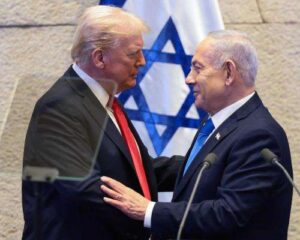
Speaking before Israel’s parliament, the Knesset, Trump hailed the truce as a “victory for Israel and the world,” describing it as the “historic dawn of a new Middle East.” His declaration followed the signing of a peace accord in Jerusalem, bringing to a close one of the most devastating conflicts in the region’s recent history.
Hostage Deal and Ceasefire: The Breakthrough
The ceasefire deal marks a significant diplomatic milestone after years of escalating violence between Israel and Hamas. All 20 surviving hostages held in Gaza were released as part of the agreement, while Israel agreed to free hundreds of Palestinian prisoners in a reciprocal gesture.
Officials from both sides confirmed that the truce would be implemented in phases — beginning with the cessation of hostilities, the exchange of prisoners, and a gradual withdrawal of Israeli forces from parts of Gaza.
U.S. diplomats described the negotiations as intense and at times contentious. President Trump reportedly used what he termed “maximum pressure” tactics to push both Israeli and Palestinian representatives toward compromise.
Trump’s Knesset Address: Triumph and Controversy
In his address to the Knesset, Trump delivered a speech filled with triumphal rhetoric and political theater. He declared that the agreement “ends an age of terror and death” and called on the Middle East to “choose the path of peace over the politics of destruction.”
Trump also stirred controversy by urging Israeli President Isaac Herzog to pardon Prime Minister Benjamin Netanyahu, who faces ongoing corruption charges. The statement drew mixed reactions, with some lawmakers applauding Trump’s boldness while others viewed it as inappropriate interference in Israel’s internal affairs.
Nonetheless, the U.S. president received a hero’s welcome. Members of the Knesset gave multiple standing ovations, and several legislators were seen chanting Trump’s name as he entered the chamber — a scene reminiscent of his past visits during his first term.
Reactions and Risks: Optimism Meets Skepticism
The agreement has been widely hailed as a foreign policy triumph for Trump and a potential turning point for the Middle East. Supporters in Israel and the United States described it as evidence that direct, hardline diplomacy can succeed where traditional negotiations had failed.
However, analysts and critics cautioned that the deal’s durability remains uncertain. Major questions linger over Hamas’s future role in Gaza, the disarmament process, and long-term guarantees for peace and security.
Humanitarian organizations also warned of the immense challenges ahead — including reconstruction of war-torn areas, return of displaced families, and ensuring aid reaches civilians still reeling from months of siege and bombardment.
Observers have noted that Trump’s framing of the agreement as a “complete victory” may be premature, given the fragile conditions on the ground and the absence of a comprehensive political roadmap for Gaza’s governance.
What Lies Ahead
Following the ceasefire announcement, Trump is scheduled to attend a regional peace summit in Sharm El-Sheikh, Egypt, alongside leaders from more than 20 countries. The summit is expected to focus on securing international funding for Gaza’s reconstruction and promoting broader regional normalization between Israel and Arab states.
In his remarks, Trump portrayed the peace accord as more than a cessation of hostilities — a strategic pivot toward a new political order in the Middle East. “This is not just an end to a war,” he said. “It is the beginning of a new era of cooperation, security, and prosperity for all the people of this region.”
Whether this moment will indeed usher in lasting peace — or serve as a brief respite before another cycle of conflict — remains to be seen. But for now, the world watches as the guns fall silent and the promise of a new beginning takes shape in a region long defined by war.